
Fresh off watching 28 Years Later, my wife and I were still in the mood for the undead, but we wanted something with a little more bite. We landed on Jeff Barnaby’s Blood Quantum (2019), a film that offers one of the most unique hooks the genre has seen in years: What if the indigenous population was immune to the zombie virus?
The Ultimate “What If”
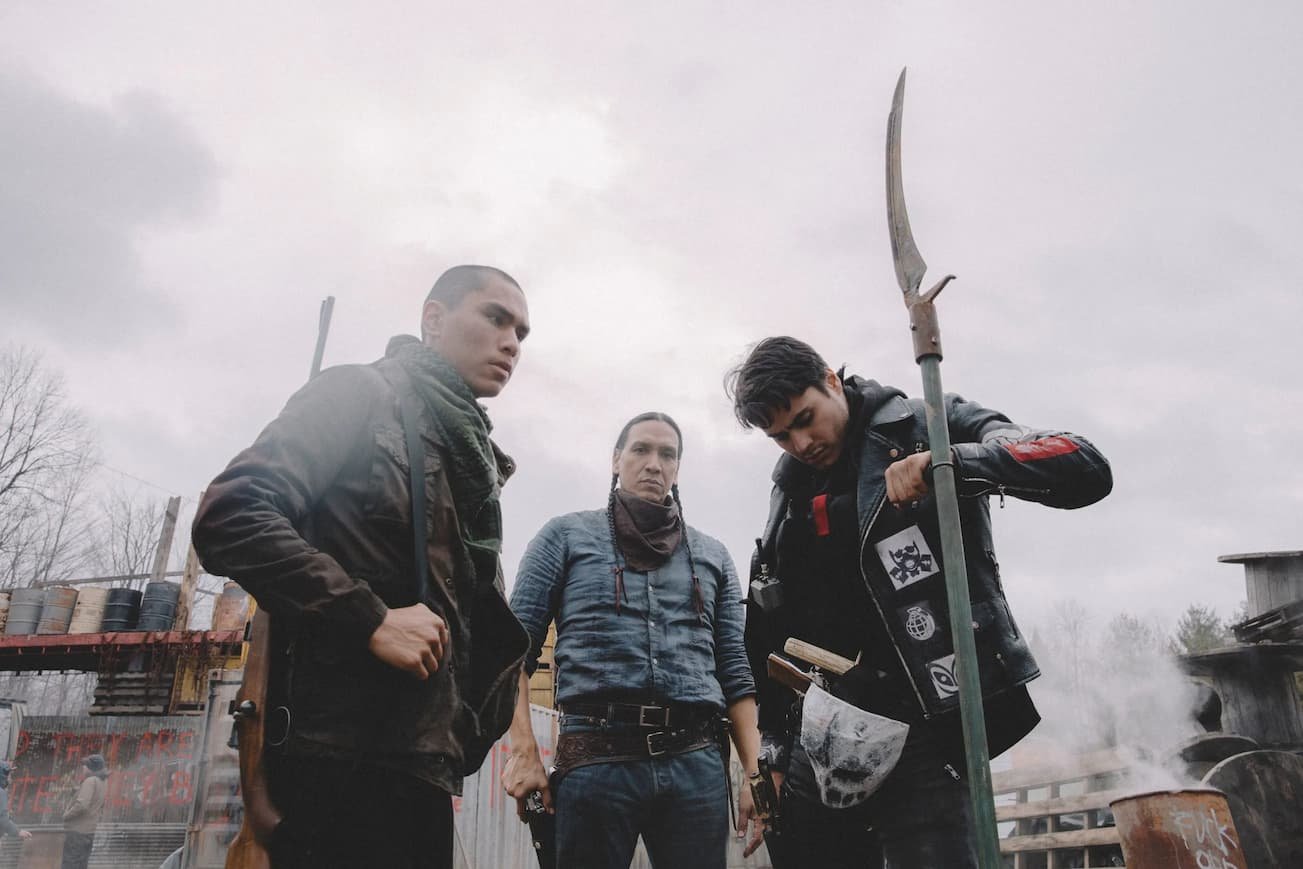
The premise is undeniably brilliant. The writer/director has stated the idea came from a historical “what if”—specifically, what if Native Americans had been immune to smallpox? The film translates that thought experiment into a modern nightmare where the Mi’gmaq reserve becomes the safest place on earth while the rest of the world crumbles.
It’s a powerful setup that naturally bakes in a lot of social commentary. The irony of the white settlers fleeing to the reserve for safety—and bringing their destruction with them—is palpable. But to the movie’s credit, it doesn’t let the metaphor get in the way of being a fun, bloody zombie feature.
Authenticity and Arteries
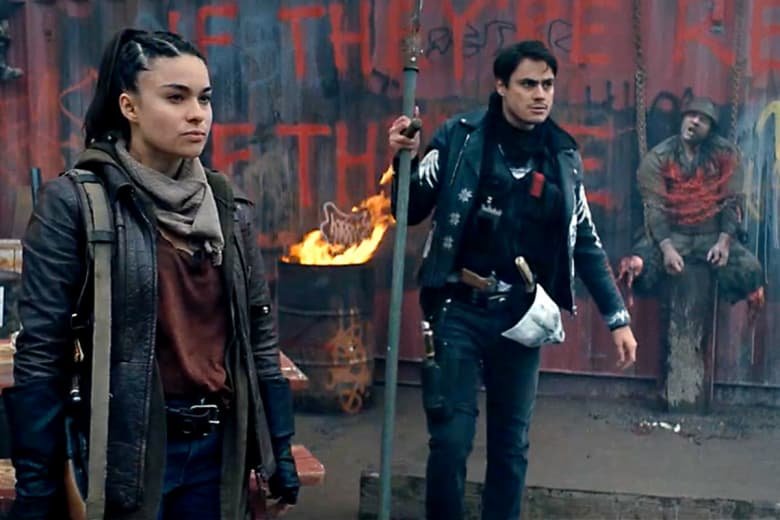
One of the film’s biggest strengths is its authenticity. Seeing Native American actors actually playing Native American characters adds a layer of grounded realism that you don’t often get in horror. It makes the setting feel lived-in and the stakes feel personal to the community.
And for those just looking for a good zombie flick, the gore delivers. The kills are brutal, the blood flows freely, and the practical effects are satisfyingly gross. There are also brief animated interludes that break up the action. While I won’t pretend to know the full cultural significance behind them, they were beautiful, non-distracting, and added a unique visual flair to the storytelling.
The “Lysol” Problem
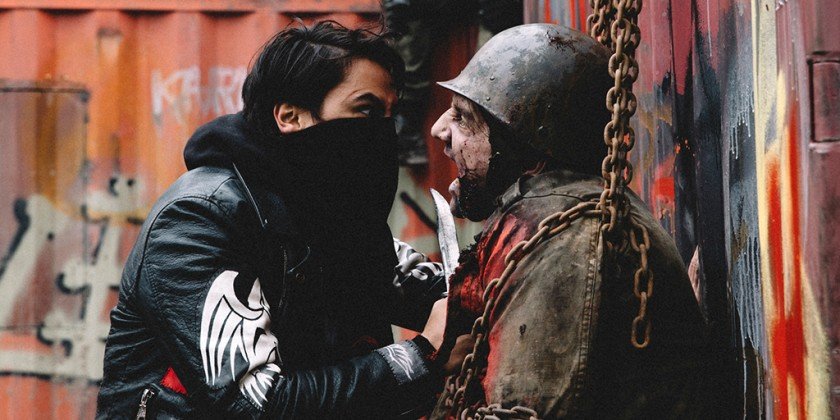
However, the movie struggles when it comes to the human element. The characters, while well-acted, aren’t given enough development for us to truly connect with them. This is most evident with Lysol, the film’s human antagonist.
Lysol feels like a forced villain—a solution to a narrative problem rather than a fully realized character. It seems the filmmakers wanted to avoid the tired “rebuilding society” tropes of The Walking Dead, so they inserted a radicalized, non-tribe-member-hating antagonist to blow everything up. His turn to villainy doesn’t move the emotional needle because we never really got to know him; he just was bad. It felt like conflict for the sake of conflict.
The Verdict
Despite the thin character work, the ending lands a heavy, realistic blow. The conclusion suggests that even when the world has ended, and even when the “white man” is a shambling corpse, they are still capable of destroying any peace or progress the Native Americans manage to build. It is a bleak, cynical, and entirely fitting end to the story.
Blood Quantum is a creative, gory entry into the zombie canon that is worth a watch for the concept alone, even if the internal drama doesn’t quite match the strength of its ideas.
Score: 3.5 out of 5 Chainsaws
Have you seen this movie? What did you think? Let us know in the comments!
Related Posts
Review: Nanook of the North (Spine #33)
The Reality of the Hunt Spine #33 takes us all the way back to 1922 for Robert Flaherty’s Nanook of the North, widely…
Reel Terror: My Bloody Valentine Review
How refreshing is ‘My Bloody Valentine’? Here’s what I had in my corner going in: A slasher flick with a cringe…
0 Comments