
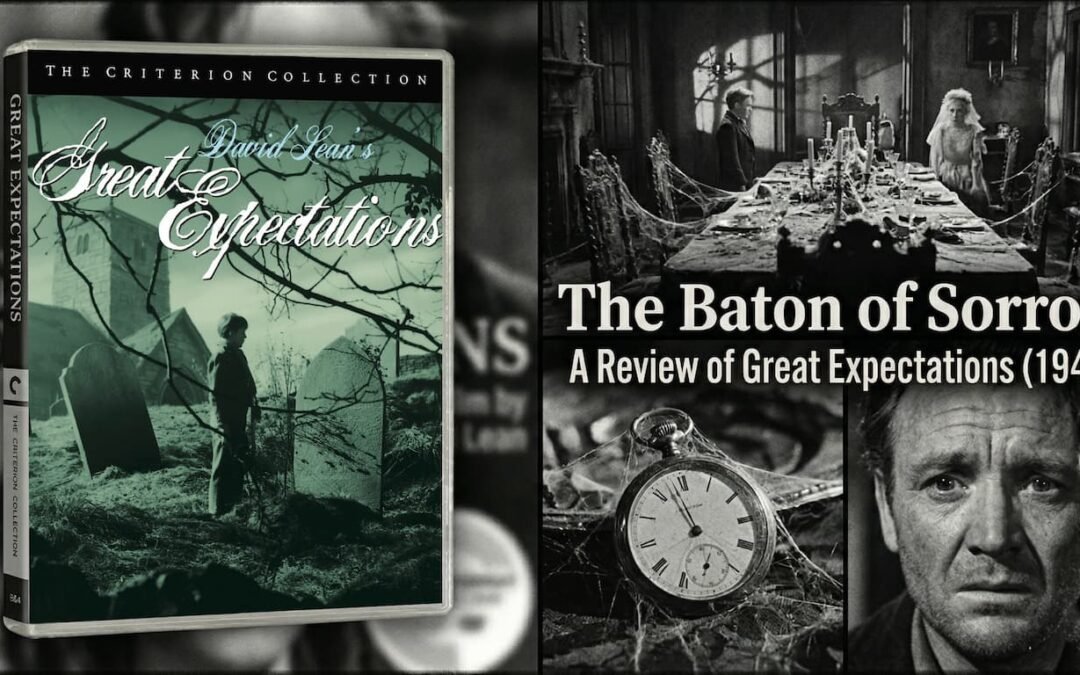
The Baton of Sorrow
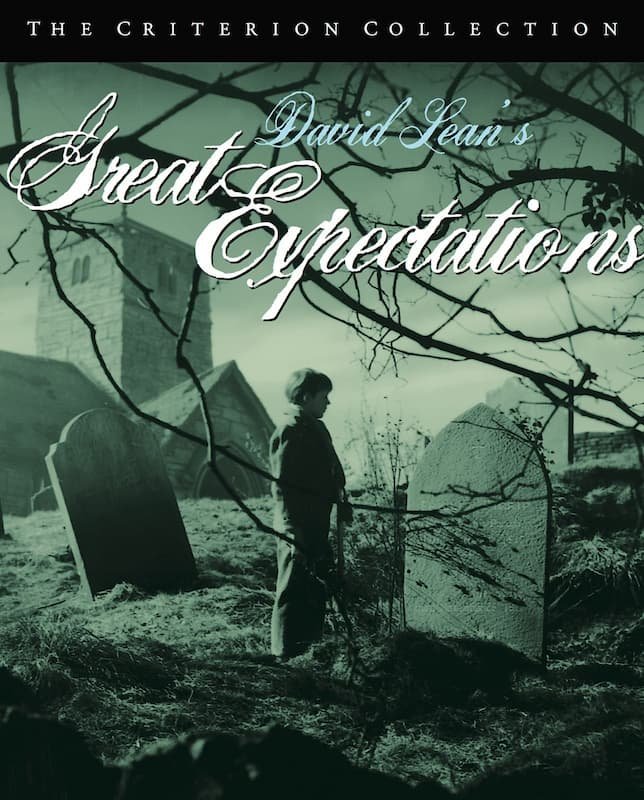
David Lean proves once again that he is a master of atmosphere. Spine #31 takes us to the misty marshes of Victorian England for what is arguably the definitive Dickens adaptation. While it is a period drama, it begins with the heart of a horror movie. The graveyard sequence—with its distorted angles and creeping dread—perfectly captures how terrifying the world is to a child. The jump scare when Magwitch finally appears isn't just a gimmick; it sets a tone of tension that never truly leaves the film.
The characters here are some of the most vivid in the collection. I don't see Miss Havisham as a traditional villain; she is too consumed by self-loathing and her own lot in life to be a mastermind. However, she is undeniably toxic. She has spent her life "infecting" Estella with her negativity, essentially handing off a baton of sorrow that she wants to outlive her. Estella is the true prisoner of the film, trapped in a mental cell far worse than the literal one occupied by her father, Magwitch.
Pip’s journey is a cautionary tale about "New Money" versus true character. Initially, his "gentleman" status was purely surface-level. He went too hard and too fast into his new life, becoming ashamed of Joe—who was actually more of a gentleman than Pip could ever buy his way into being. It is only through the crushing realization of where his money actually came from, and his subsequent self-reflection, that Pip finally completes his transformation into a man of substance.
The Verdict: Great Expectations is a visual masterpiece that uses Gothic horror to tell a story about class and trauma. It reminds us that being a "gentleman" has nothing to do with your benefactor and everything to do with how you treat the people who knew you when you had nothing.
Related Posts
Review: Nanook of the North (Spine #33)
The Reality of the Hunt Spine #33 takes us all the way back to 1922 for Robert Flaherty’s Nanook of the North, widely...
Reel Terror: My Bloody Valentine Review
How refreshing is ‘My Bloody Valentine’? Here’s what I had in my corner going in: A slasher flick with a cringe...
0 Comments