
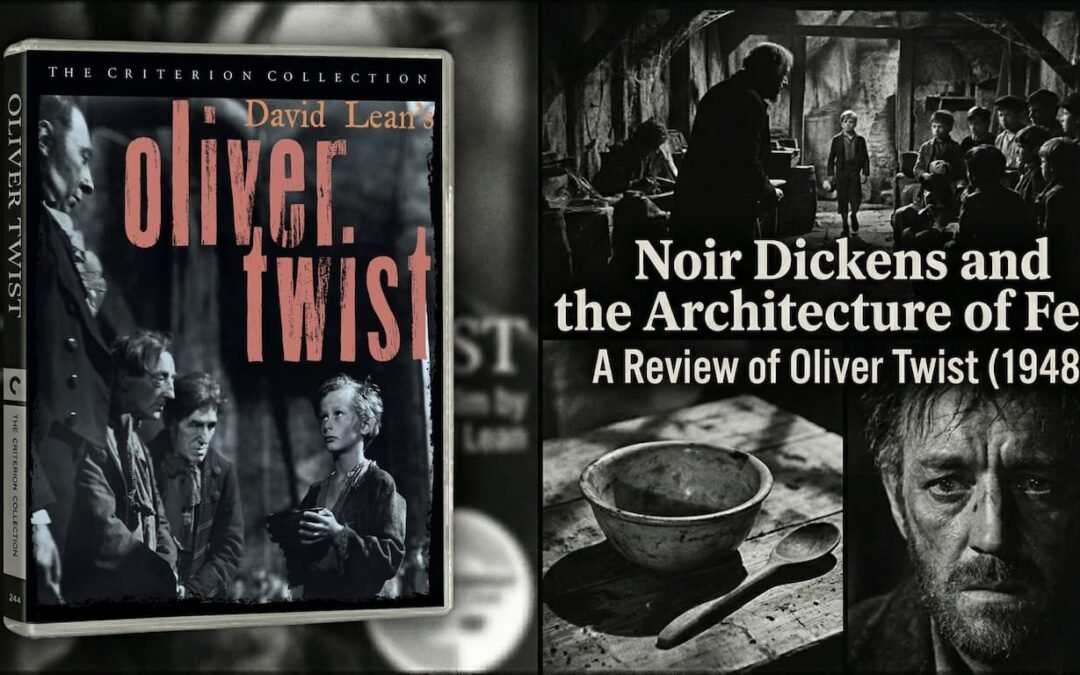
Noir Dickens and the Architecture of Fear
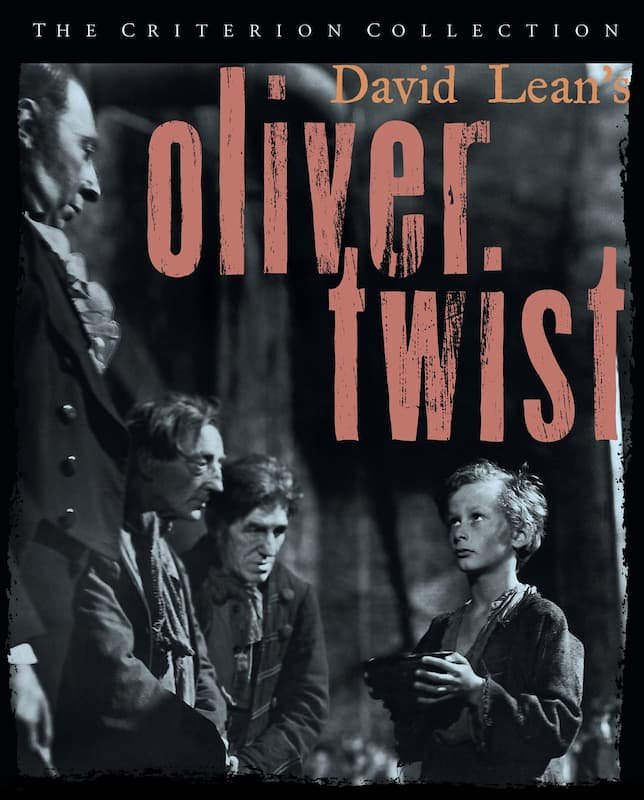
Spine #32 completes the David Lean/Dickens double feature, and if Great Expectations was Gothic horror, Oliver Twist (1948) is pure "Noir." I was surprised by how ambitious and heavy the subject matter was for 1948—specifically the wordless opening of an unwed mother struggling through a storm to find safety for her unborn child. Like the graveyard opening of the previous film, this dark, frightening introduction immediately hooked me. It tells you right away that this isn't a fairy tale; it’s a struggle for existence.
The cast is phenomenal, led by a transformative Alec Guinness as Fagin. There is absolutely nothing trustworthy about his performance; he is a master manipulator of children. It’s interesting to note the lineage of this character—I could easily see how Ben Kingsley (who later played Fagin) might have drawn from Guinness’s version when creating the "Mandarin" for the MCU. Both characters use a specific kind of theatricality to hide a much darker core.
However, the true terror of the film is Bill Sikes. While Fagin and the boys rely on sleight-of-hand and sneakiness, Sikes relies purely on fear and force. He is willing to go further than anyone else in the criminal underworld, making him a force of nature that even the other "bad guys" are afraid to cross. He doesn't need a plan; he just needs his temper and his shadow.
The ending was deeply satisfying. After Sikes proves he can out-muscle the other criminals, the introduction of the mob—led unintentionally by his own dog, Bull's-eye—provides the only realistic way to take him down. Watching Sikes unravel on the rooftops, trapped by a crowd that has finally had enough, was a fitting and chaotic conclusion to a very dark journey.
The Verdict: Oliver Twist is a reminder that Dickens was writing about the "High and Low" of society long before Kurosawa. David Lean captures the grime and the desperation perfectly, proving that some stories are timeless because the fears they tap into—hunger, isolation, and the threat of violence—never really go away.
Related Posts
Review: Nanook of the North (Spine #33)
The Reality of the Hunt Spine #33 takes us all the way back to 1922 for Robert Flaherty’s Nanook of the North, widely...
Reel Terror: My Bloody Valentine Review
How refreshing is ‘My Bloody Valentine’? Here’s what I had in my corner going in: A slasher flick with a cringe...
0 Comments