
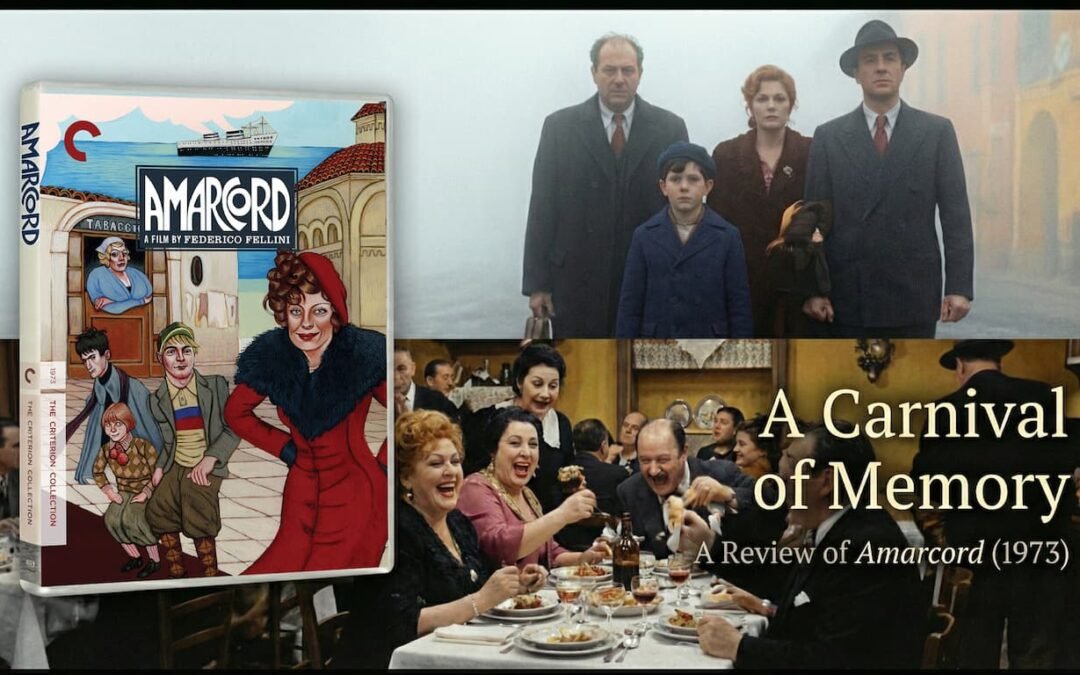
A Carnival of Memory
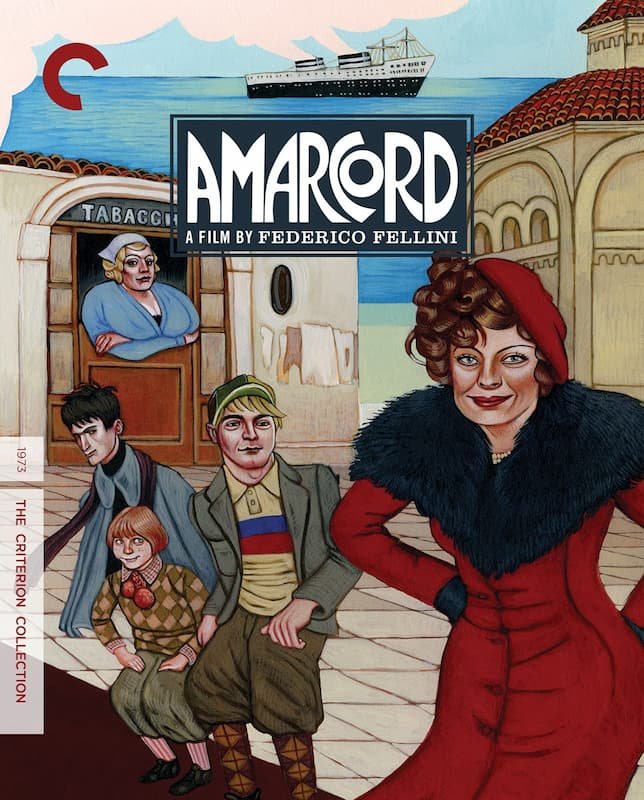
If the first three spines of the Criterion Collection were lessons in narrative structure, Spine #4 is a lesson in throwing the rulebook out the window. Federico Fellini’s Amarcord (1973) represents a massive leap for the collection: the first color film, the first “modern” film (relatively speaking), and the first to abandon a linear plot entirely.
Instead of a traditional story, we get a year in the life of a coastal Italian town under Fascism. The structure reminded me less of a typical drama and more of A Christmas Story—a series of loosely connected vignettes centered on childhood, family, and the eccentric characters that populate a young boy’s world. While I generally prefer a more linear narrative, I found myself accepting what Fellini was delivering: a film not about “what happens next,” but about “how it felt.”
The title translates to “I Remember,” and the film operates exactly like memory: distorted, exaggerated, and larger than life. The casting is crucial here. The characters—from the voluptuous tobacconist to the fierce teachers—aren’t realistic; they are caricatures. But this distortion feels intentional. The further we get from our childhood, the more the people in it become “characters.” Fellini isn’t documenting history; he is documenting the feeling of a memory, where every adult is either a hero, a villain, or a clown.
This choice of film feels like a calculated, surgical move by Criterion. By choosing Amarcord as Spine #4, they are signaling that their collection will not just be a repository of “old movies” or “Hollywood classics” (four films in, and we still haven’t seen an American production). They are establishing that cinema is a global language, capable of being messy, surreal, and deeply personal.
The Verdict: Amarcord is a challenge to the viewer to let go of the need for a plot and simply live in a world for two hours. It is a colorful, noisy, vulgar, and beautiful carnival of nostalgia. It may be different, but it earns its place as a cornerstone of the collection.
Related Posts
Review: Alphaville (Spine #25)
The Emperor’s New Sci-Fi Sometimes, a film is a profound exploration of society, and sometimes, it is exactly what it…
Review: High and Low (Spine #24)
The Morality of a Ransom For my second Kurosawa experience (after Seven Samurai ), High and Low (1963) trades the…
0 Comments