
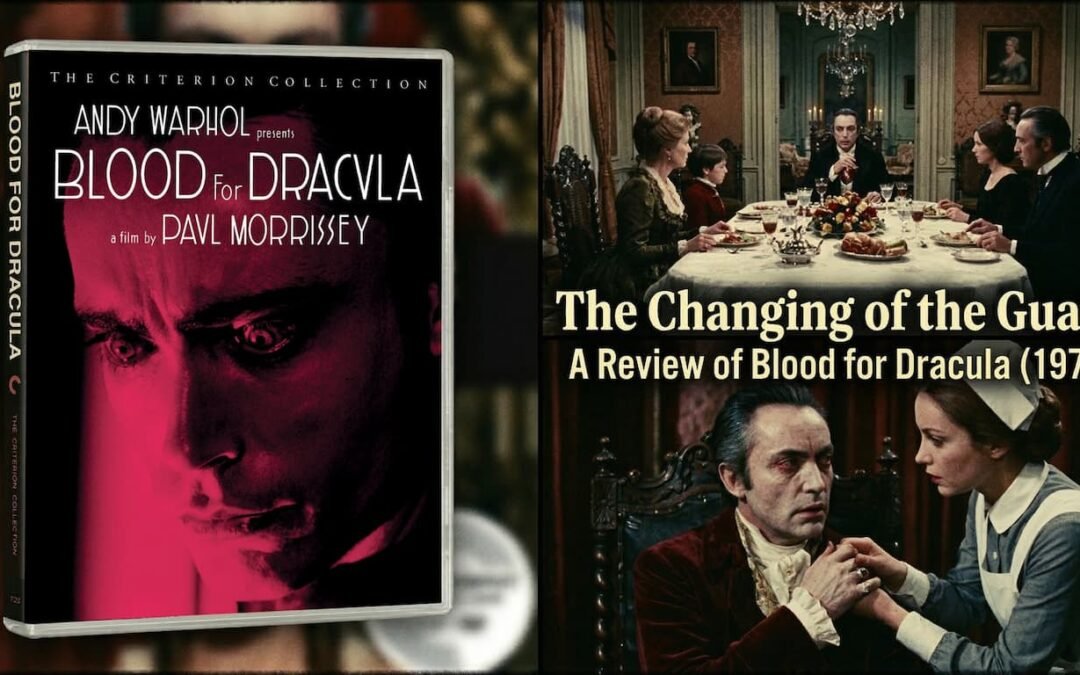
The Changing of the Guard
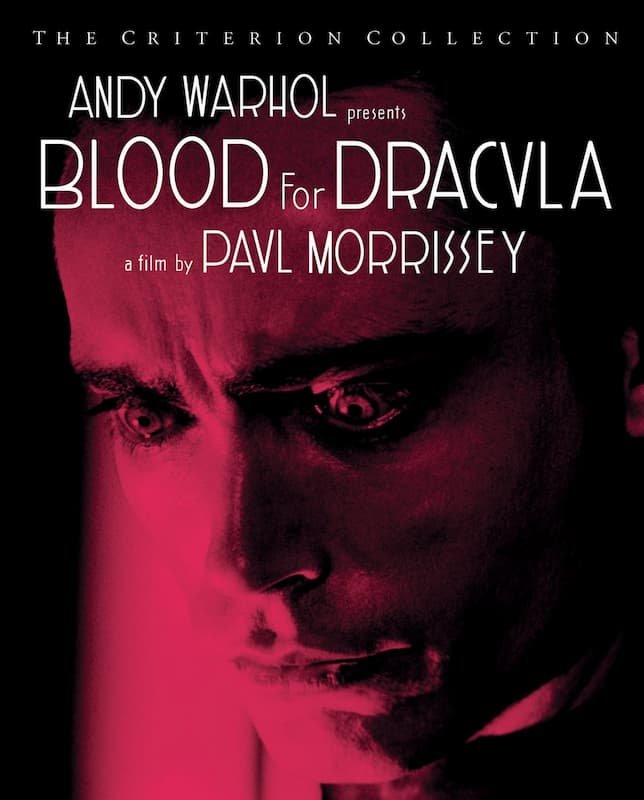
Spine #28 completes the Warhol/Morrissey double feature, and it is a film that trades the laboratory for the sickroom. If Flesh for Frankenstein was about the vanity of creation, Blood for Dracula (1974) is a cynical look at the desperation of a dying class—and the brutality of the class that replaces it.
This is fundamentally a movie about predators. On one hand, you have Dracula (Udo Kier), who possesses a title, wealth, and prestige but lacks strength, energy, and health. He is a starving snob, physically frail and vomiting bile because he can only survive on the blood of “virgins”—a commodity that is increasingly hard to find in the progressive 70s. On the other hand, you have Mario (Joe Dallesandro), who is everything Dracula is not: strong, poor, and a peasant.
While the film plays them off as the typical hero/villain duo, one could argue that Mario is just as morally bankrupt as the Count. Both are predators of women. Dracula is “pickier” out of biological necessity, but Mario uses the sisters to feed his libido, offering himself as the only non-family male in their isolated world. Mario insults, beats, and forces himself upon them; he isn’t saving them from Dracula so much as he is “clearing the field” for his own exploitation.
I’ve come to really like Paul Morrissey’s style. He maintains the “10% over the top” performances that made the previous film so engaging. However, this style of filmmaking feels like a relic of a specific era. In today’s cinematic landscape, the castle sets and “cheesy” special effects would likely be scolded by modern film fans who prioritize realism over art-house expressionism.
The Verdict: Blood for Dracula is a fascinating, grisly end to the set. It suggests that while the old aristocrats are pathetic and dying, the “heroes” waiting to take their place are just as dang
Related Posts

5 Greatest Baseball Players in Film History
When we talk about the “magic” of the movies, we often focus on the spectacle, but for a baseball fan, that magic is…
Review: M (Spine #30)
The Sound of Dread Spine #30 takes us to 1931 Berlin for Fritz Lang’s first sound film, and it is a masterclass in…
0 Comments