
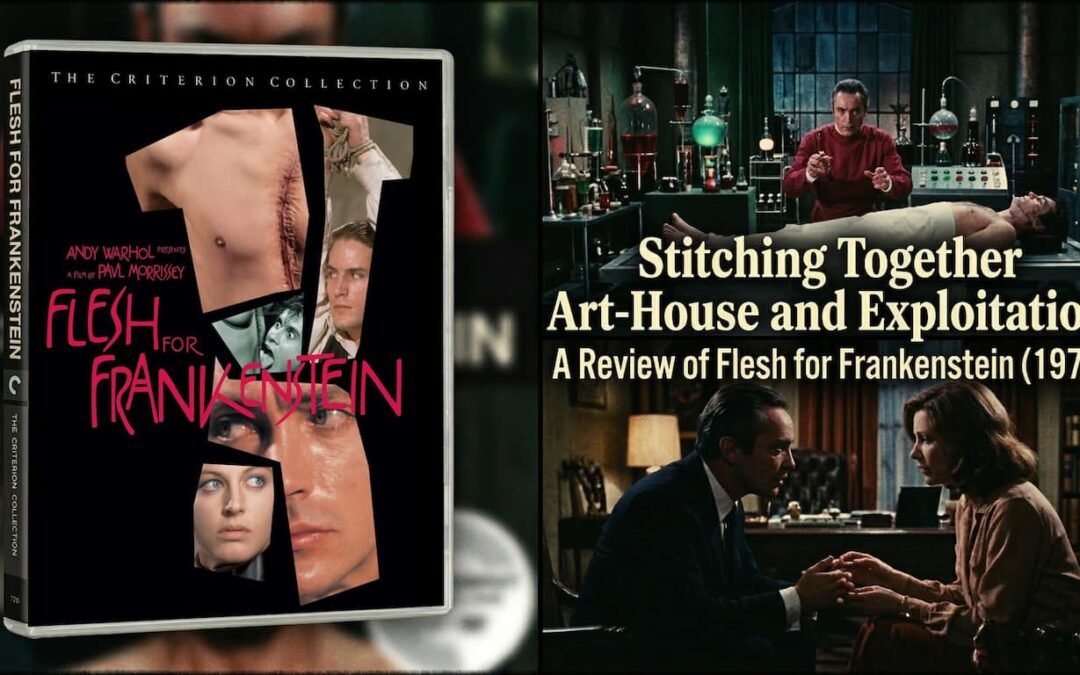
Stitching Together Art-House and Exploitation
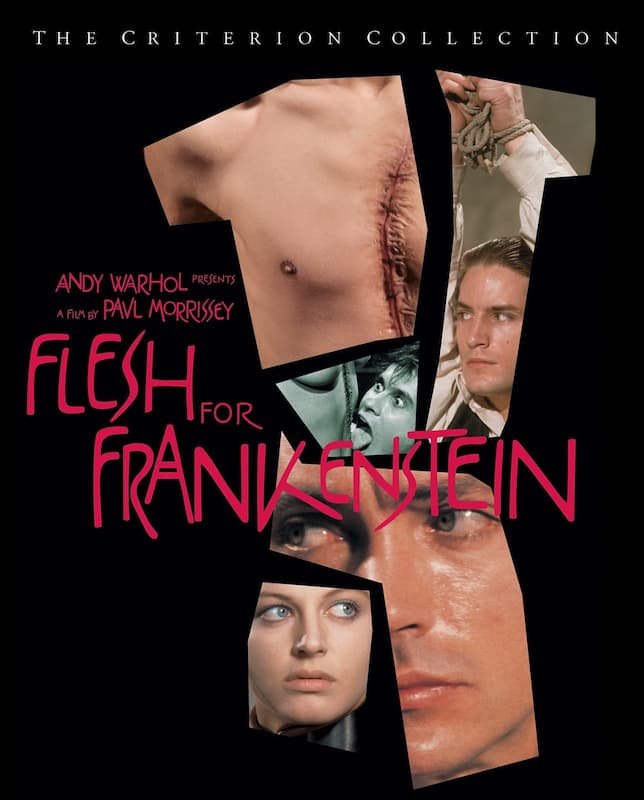
Spine #27 is a wild departure from the gritty realism of The Long Good Friday. Produced by Andy Warhol and directed by Paul Morrissey, Flesh for Frankenstein (1973) is a grotesque, campy, and surprisingly thoughtful reimagining of the Shelley myth. It takes the bones of a classic Hammer horror film and pushes every element about 10% beyond reality, landing in a stylized, over-exaggerated territory that is as entertaining as it is repulsive.
The Frankenstein story is legendary, and I appreciate that the filmmakers were willing to differentiate it to make it fresh. We see endless retellings of Cinderella or Romeo and Juliet—there is no reason the Modern Prometheus shouldn’t get the same treatment. In this version, the Baron isn’t just seeking knowledge; he is a sexually repressed aristocrat trying to build a master race. It’s “Art-house Horror” that uses gore to make a point about the vanity of the ruling class.
The heart of the story is Nicholas, the farmhand who stumbles into the Baron’s house of horrors. Much like in society today, it often takes a “commoner” to expose the nastiness hidden behind the doors of the wealthy. Nicholas is a hero because he represents a moral compass in a vacuum of sanity; he is pulled in by the offerings of the house, enjoys them until he sees the reality behind the curtain, and then works to end the depravity. We need more heroes like him today.
The Verdict: I’m glad Criterion chose this film early in the collection’s history. It represents a time when the label was willing to take risks on films that pushed boundaries. Having Andy Warhol’s name attached certainly helped with exposure, but the film stands on its own as a daring, bloody, and innovative piece of 70s cinema.
Related Posts

The Cinema Sanctuary: Why Movie Theaters Still Matter in a Digital Age
Josh Adams Tucked within the folds of this applesauce brain of mine are a thousand electrical impulses representing…
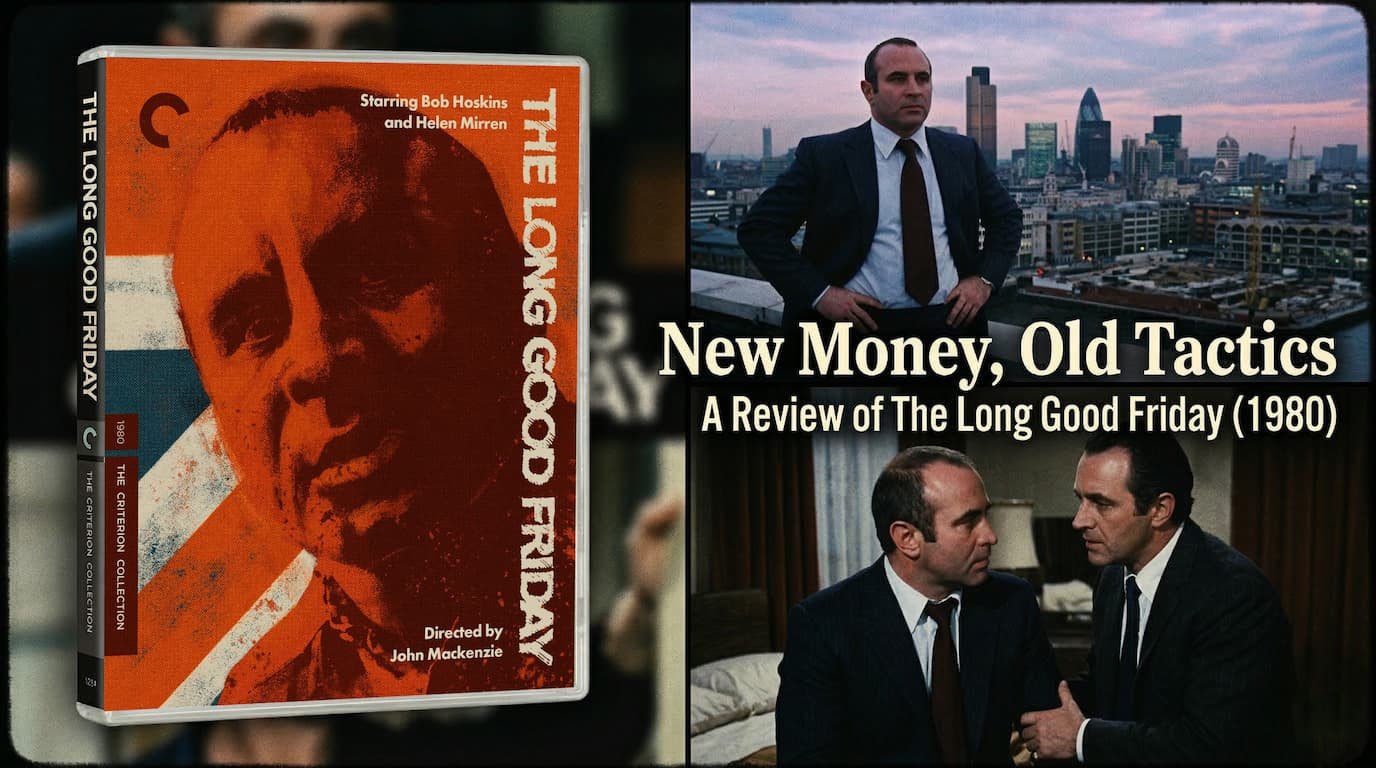
Review: The Long Good Friday (Spine #26)
New Money, Old Tactics After the aimless, stylistic wandering of Alphaville , The Long Good Friday (1980) hits like a…
0 Comments