
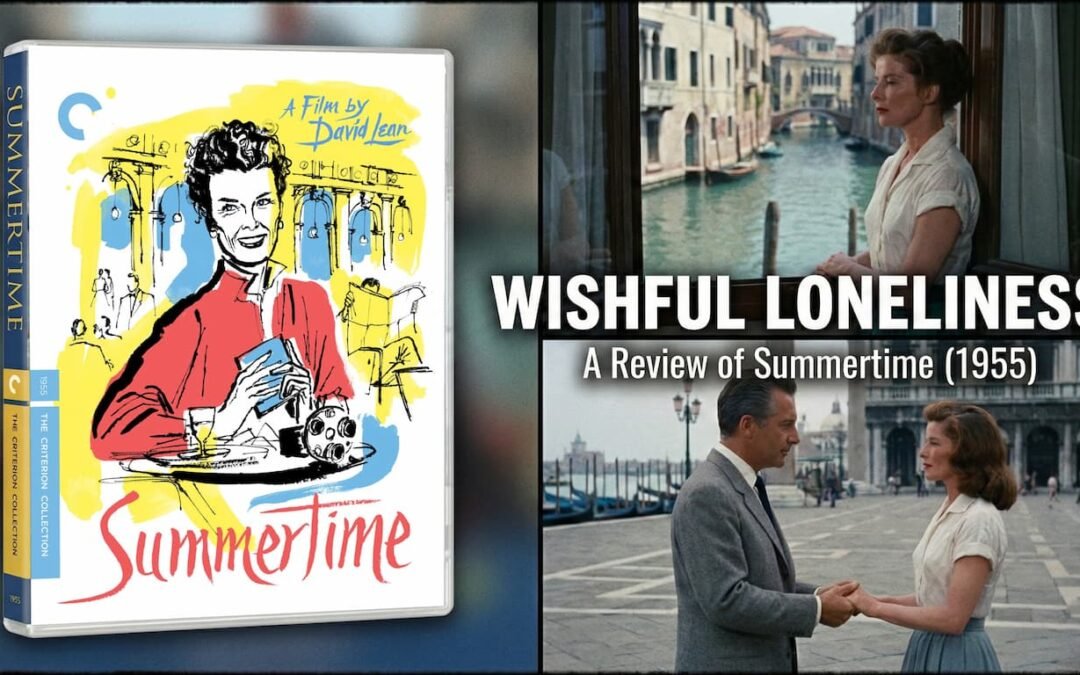
Wishful Loneliness
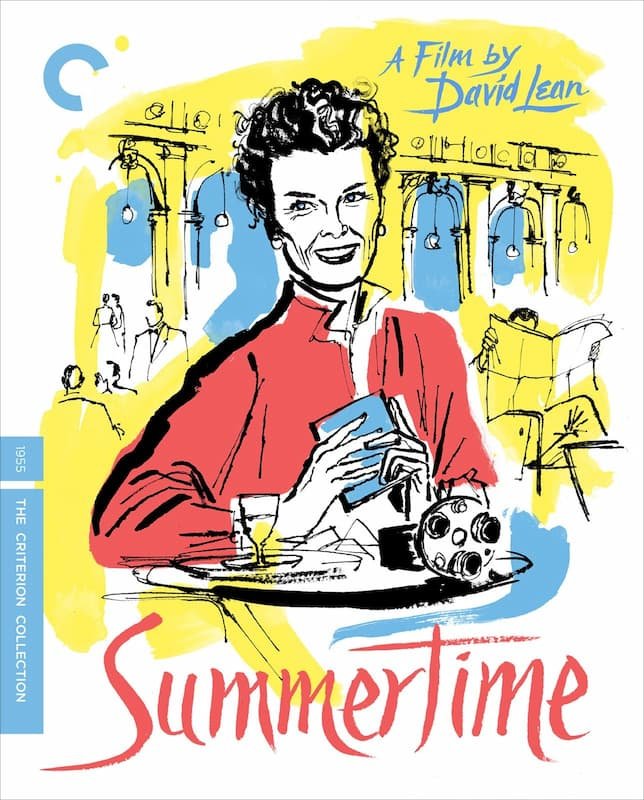
Spine #22 offers a complete tonal reset. We move from the clinical, cold horror of Dead Ringers to the warm, heartbreaking beauty of David Lean’s Summertime (1955). This is a film that rests entirely on the vulnerability of Katharine Hepburn, and I’ve never seen an actress demonstrate “wishful loneliness” quite like she does here.
Jane Hudson (Hepburn) begins the film using her status as a tourist as a shield. She is afraid of her own internal desires and refuses to swallow her pride to give in to them. Instead, she uses her camera to capture beauty rather than experience it. Beauty is everywhere in Venice, and while she finds the city so full of love she can’t help but want it for herself, the wall she has built is difficult to penetrate. For the first half of the film, her internal struggle is the strongest power in the story.
Once she finally relaxes and opens up to Renato, the film introduces a new, grounded conflict: his marriage. This feels incredibly real within the context of the story—it is just another gut-punch for Jane, another hurdle she has to navigate to truly get in touch with what she wants. It isn’t a fairy tale complication; it is an adult one.
Ultimately, the film succeeds because it embraces reality. Jane leaves Venice happy, not because she secured a husband, but because she finally put the camera down and lived. She knows that throwing her American life away for a holiday romance isn’t realistic. Venice was a vacation, and vacations aren’t intended to last a lifetime. She came to find something, she found it, and she took the memory home.
The Verdict: Summertime is impossible not to love because it is impossible not to be happy for Jane. It is a masterclass in vulnerability, showing a woman moving from observing life through a lens to finally stepping into the frame.
Related Posts

Review: Alphaville (Spine #25)
The Emperor’s New Sci-Fi Sometimes, a film is a profound exploration of society, and sometimes, it is exactly what it…
Review: High and Low (Spine #24)
The Morality of a Ransom For my second Kurosawa experience (after Seven Samurai ), High and Low (1963) trades the…
0 Comments