
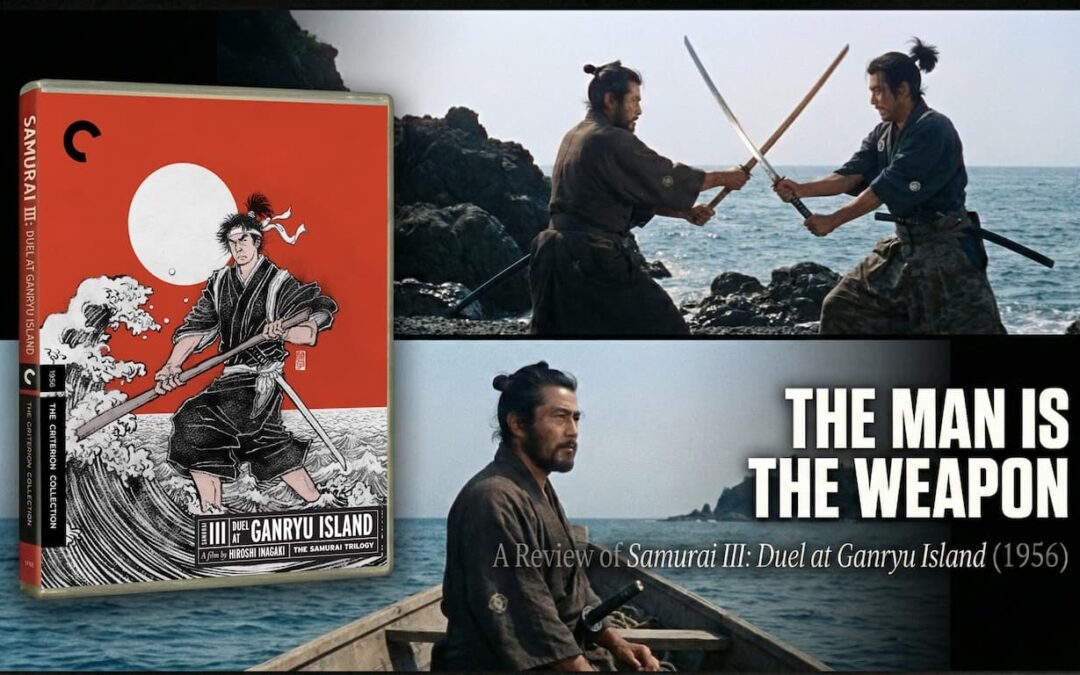
The Man is the Weapon
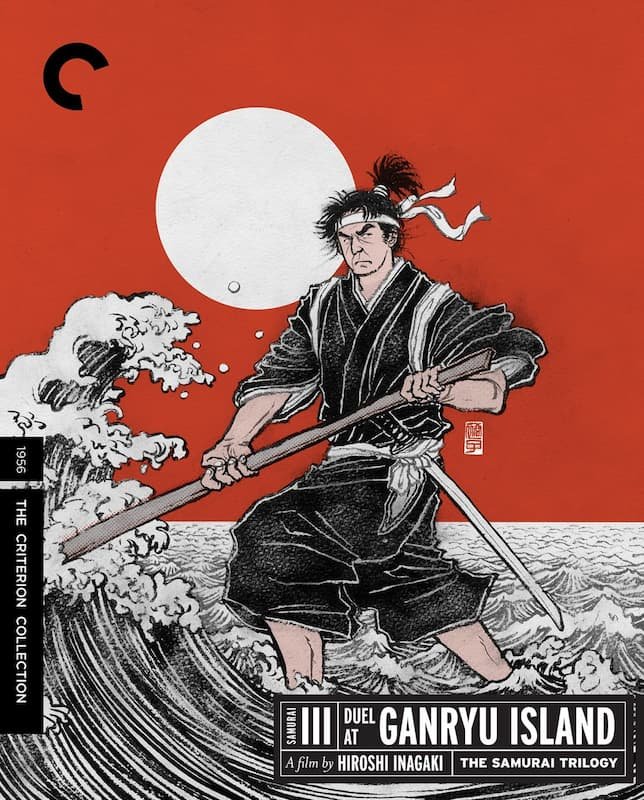
The journey that began with a wild beast in the mud concludes with a master carving an oar on a boat. Samurai III: Duel at Ganryu Island (1956) is a satisfying, if melancholy, end to the Musashi trilogy. It balances the action with the melodrama of a rough soul chasing an unrealistic goal, only to realize the reality isn’t as wonderful as he dreamed.
The film is famous for the final duel where Musashi arrives hours late. While history often paints this as a psychological tactic to anger his opponent, I read it differently. I saw it as Musashi putting off a task he didn’t want to complete. He keeps his promise because his honor demands it, but his reluctance suggests he has finally learned the cost of taking a life. The image of him carving his weapon on the boat ride over is the perfect visual for his transition: through the first two films he was physically ready but mentally lacking; here, he is spiritually ready, so the physical preparation (making the sword) is just a formality.
His choice to use a wooden oar instead of steel is the ultimate statement: He is the weapon. If he didn’t possess the soul to win, the instrument of death wouldn’t matter.
Before this violence, the film wisely slows down for a long sequence where Musashi lives as a farmer. It is a beautiful metaphor for returning to his roots—the peasant who once dreamed of the sword is now the swordsman finding peace in the soil. It echoes Seven Samurai, showing a warrior protecting the creators of life rather than just destroying it.
The tragic subplot of Akemi and Otsu also finds its necessary resolution. Akemi, consumed by the “wild” life, redeems herself in death, clearing the path. It was the only outcome that worked; Musashi’s journey required a final separation from his chaotic past.
The Verdict: The final duel is brief—perhaps too brief given the buildup—but it reinforces the theme of the trilogy. This story was never really about the battles; it was about the life lived in between them. Musashi ends the film not in triumph, but in tears, a man who has mastered the sword but feels the weight of using it.
Related Posts

Review: Alphaville (Spine #25)
The Emperor’s New Sci-Fi Sometimes, a film is a profound exploration of society, and sometimes, it is exactly what it…
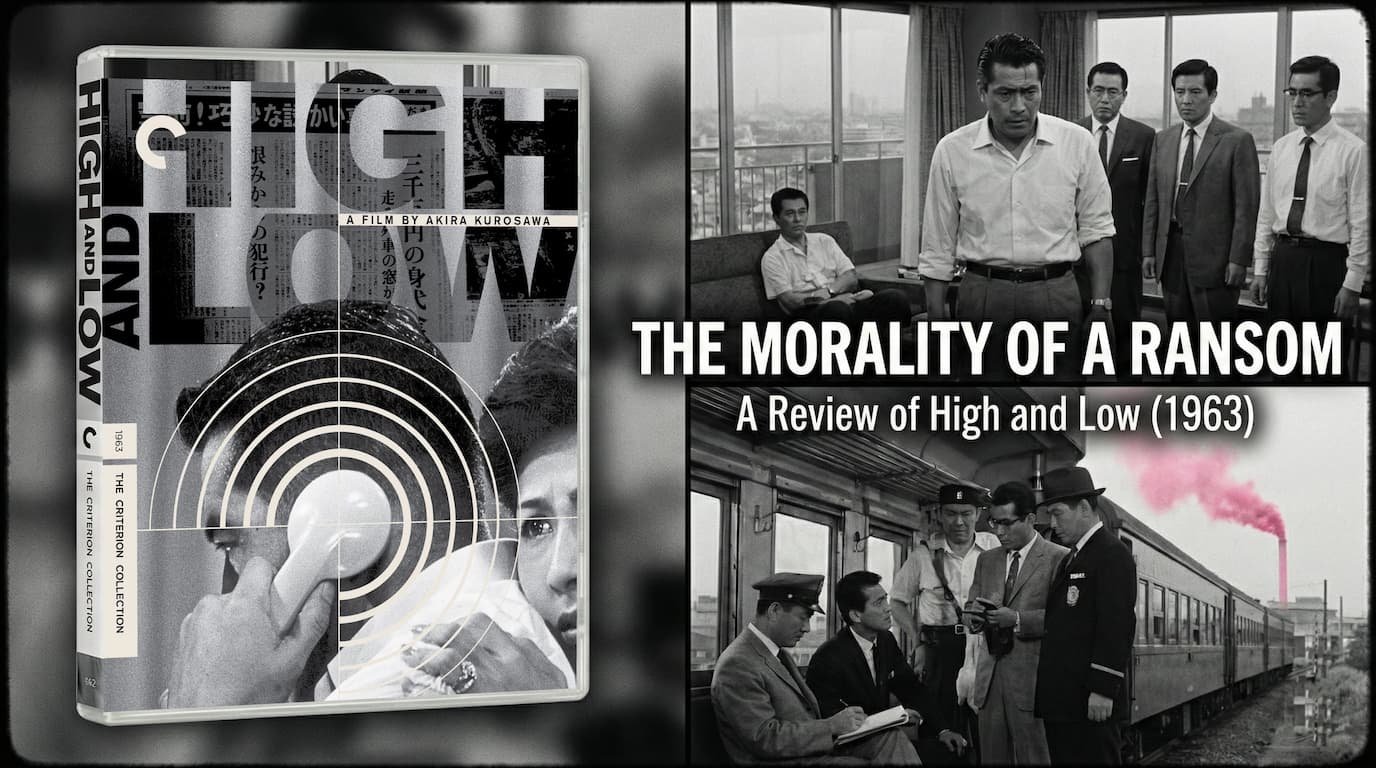
Review: High and Low (Spine #24)
The Morality of a Ransom For my second Kurosawa experience (after Seven Samurai ), High and Low (1963) trades the…
0 Comments