
Ronin, Rice, and the Necessity of Symbiosis
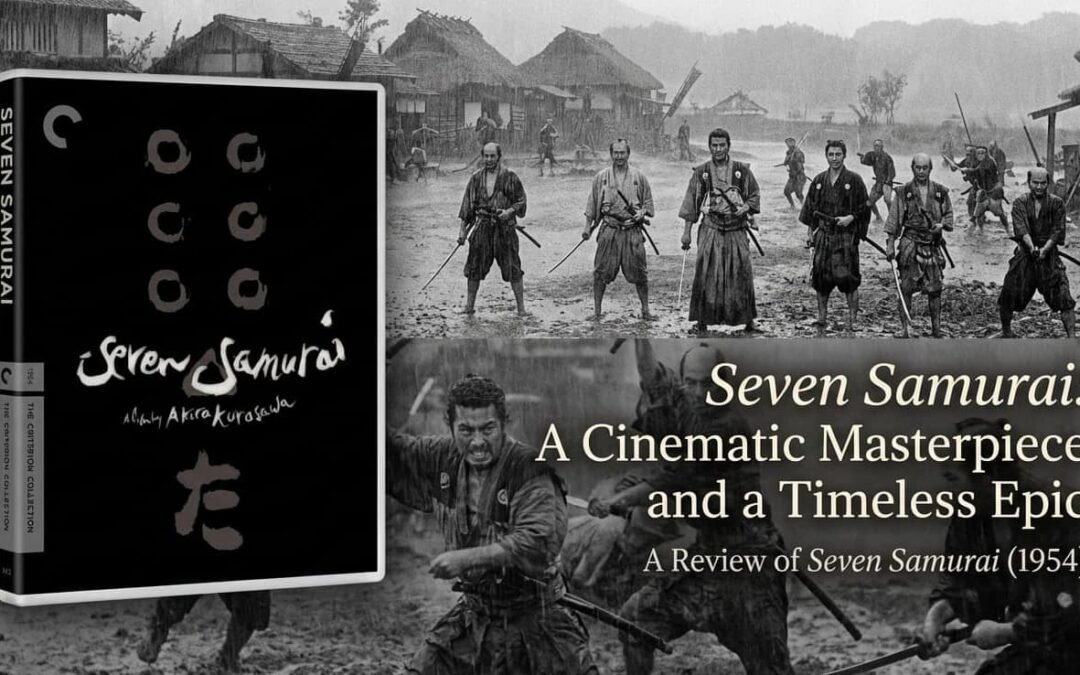
If Grand Illusion was about the polite decay of the upper class, Seven Samurai (1954) is about the desperate survival of the lower class—and the warriors who have no choice but to join them. While often framed as a story of strong men saving weak peasants, Kurosawa’s masterpiece is truly about mutual need. The villagers need the samurai for survival, but the samurai need the villagers for purpose (and quite literally, for food).
The dynamic is established early through language. The farmers reverently refer to the warriors as "Samurai" (viewing them almost as superheroes), while the warriors refer to themselves as "Ronin" (masterless). The warriors know the reality the farmers do not: they are unemployed drifters, in some ways no better off than the peasants they are hired to protect. This gap is bridged only when the samurai realize the villagers are eating millet so their protectors can eat white rice. It is the moment the "superheroes" understand the gravity of the sacrifice being made for them.
The film’s 3.5-hour runtime is often discussed, but it is necessary. Today, the training of the villagers would be reduced to a montage. Kurosawa instead takes the time to show the connection building. The samurai cannot win this alone; they need the farmers' manpower just as the farmers need the samurai's strategy. Even the village elder, often seen as helpless, displays true leadership by recognizing his own limitations and delegating the defense to those who can get the job done.
The emotional core of this class struggle is Kikuchiyo (Toshiro Mifune). His pivotal speech, blaming the samurai class for making the farmers "miserly and craven," acts as a mirror. The samurai here are like modern pro athletes who look down on the masses that support them, failing to realize that their elite status relies on the labor of others. Kikuchiyo forces them to see that selfishness.
The Verdict: The famous final line—"The winners are those farmers. Not us"—is not a scorecard of the battle, but a statement of reality. The farmers keep their land, their harvest, and their community. The samurai, having lost four of their own, have gained nothing but their next meal. They sacrificed everything for no material gain, destined to move on to the next battle, while the "weak" villagers return to the strength of the earth.
2 Comments
Submit a Comment
Related Posts
Review: Nanook of the North (Spine #33)
The Reality of the Hunt Spine #33 takes us all the way back to 1922 for Robert Flaherty’s Nanook of the North, widely...

Reel Terror: My Bloody Valentine Review
How refreshing is ‘My Bloody Valentine’? Here’s what I had in my corner going in: A slasher flick with a cringe...
Love the parallels with how a galvanized working class can demonstrate influence!
It’s such a great movie!